
Shifting Ideologies: New Generation of Black Organizers Challenge Legacy Institutions
Article By James Jackson
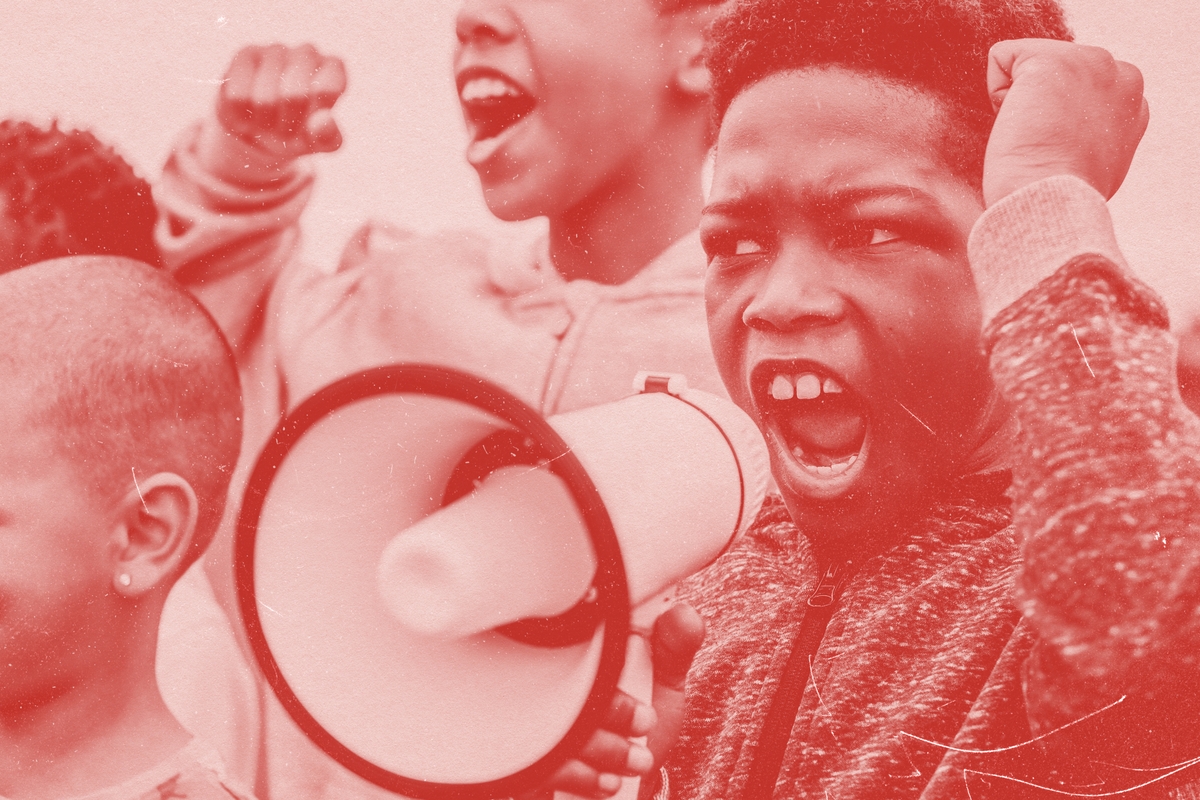
Roberto Rickards didn’t know organizing was a profession. He just knew some things had to change.
Growing up in Mount Laurel, Rickards lived in a mostly white neighborhood with large homes and quiet streets. He often visited family in the Frankford section of North Philadelphia, where he witnessed violence and hardship that stood in stark contrast to his own community.
His journey into organizing reflects a broader trend across Philadelphia, South Jersey, and beyond: new and emerging organizers are rethinking how Black-led civic organizations should be run.
Researchers at North Carolina State University interviewed 22 young Black activists in 2023 and examined how they understand their role in social movements and activism in today’s political landscape.
The research found that participants were motivated by a sense of responsibility to their communities, but faced resistance from larger institutions while organizing.
One participant, identified as Reese, questioned how institutions respond to calls for racial justice, saying, “I feel like if you don’t make change and assess that change, then it’s just a committee that stands with nothing.”
“I was trying to make sense of this most of my life, like, why is it like this?” Rickards said. “I knew I wanted to be a part of the solution of figuring out how to make things better.”
His questioning eventually led him to organizing. He now serves as an organizer with Black Men Build, a grassroots organization formed in 2020 that focuses on political education and Black men’s empowerment.
Other organizers have witnessed the landscape change as well.
James Thompson, an organizer with the NJ Black and Empowerment Coalition, has been organizing for more than 20 years. He credits tools like email, text messaging, and virtual meetings with changing who gets involved.
Thompson added that one of the challenges for Black-led organizations is watching federal policies that once produced gains for Black and Brown families slowly fade.
“Seeing those protections erode over the past year can be discouraging,” he said, “but it also pushes us to work more closely in partnership and in coalition.”
He said the NAACP remains relevant in today’s political landscape, but with the rise of newer grassroots organizations and more accessible tools, it no longer has to confront every issue on its own.
Rickards credits legacy organizations with mostly helping upwardly mobile Black Americans, but not underserved communities.
“Only a small number of organizations are saying, ‘OK, we need to shake this whole tree,’” Rickards said. “It’s been too long where Black folks are not OK and this country is OK with Black folks not being OK.’”
That shift has also played out in local journalism.
The Philadelphia Association of Black Journalists disaffiliated from the National Association of Black Journalists after a national audit requested chapter membership emails. NABJ Philly was later formed by members aligned with the national organization.
“Your decision not to submit a chapter audit and remain out of compliance means the Philadelphia Association of Black Journalists will not receive the benefits of being affiliated with the National Association of Black Journalists,” said then-NABJ President Dorothy Tucker.
When asked how PABJ stands out from NABJ, current President Ernest Owens said the difference comes down to how PABJ responds to its members.
“Our members have been showing up and showing out because PABJ is meeting them where they are, rather than forcing them to conform to academic models,” Owens said.
Sherry Howard, a former two-time treasurer with PABJ, initially thought both sides could smooth things over. When they didn’t, she and other veteran journalists formed NABJ Philly in October 2023. She now serves in the same role at NABJ Philly.
“It was no longer the organization we had built, so it was time to build another one,” she said.
For Howard, national affiliation remains essential because it reminds Black journalists that they don’t have to work in isolation.
“We always felt that even at our smaller level, you need something bigger than you,” she added.
PABJ operates independently of national supervision, according to Owens, allowing it to avoid fees and audits and respond more directly to the needs of Black journalists in Philadelphia.
In 2024, PABJ partnered with podcast studio RADIOKISMET to create the Black Podcasters Academy, training Black content creators and media entrepreneurs to produce a podcast series. In 2025, it also held an Emerging Media Diversity Convention featuring workshops and a career expo for emerging media professionals.
Owens credits both programs to the input of current PABJ members.
Howard said NABJ Philly sets itself apart through its commitment to strengthening journalists not just professionally, but on a personal level as well.
“We look at the issues. We bring in speakers every month who talk about political issues or what is in the news and health issues, things that go beyond just writing about the news but help make us full individuals.”
Darnell Hardwick, a former president of the Camden NAACP, said the organization’s long-standing reputation continues to make it a touchpoint for people dealing with discrimination.
“When we get in trouble, we turn to the NAACP for help because they are the oldest civil rights organization in the country,” he said. “That’s what I did when I experienced discrimination at my job.”
In 2021, the Camden branch was revoked following internal disputes over leadership and strategy, including a member’s decision to send recordings of contentious Zoom meetings to the national office.
The national office did not respond to requests for comment.
According to NAACP bylaws, an investigation should have occurred, but five years later, there has been no progress. Last year, hopeful members launched a petition with the South Jersey Progressive Democrats that currently has more than 750 signatures.